Everlusting Life
Play Everlusting Life
Everlusting Life Screenshots

Everlusting Life review
Explore the immersive fantasy auto-chess experience with strategic gameplay and character development
Everlusting Life stands out as a distinctive auto-chess strategy RPG set in a richly detailed fantasy world. This narrative-driven experience combines interactive storytelling with strategic team-building mechanics, offering players an engaging blend of character development and tactical gameplay. Whether you’re drawn to the anime-styled aesthetics, the complex relationship systems, or the strategic depth of team composition, Everlusting Life delivers a multifaceted gaming experience designed for mature audiences seeking substance and immersion in their gaming adventures.
Understanding Everlusting Life: Core Gameplay Mechanics
Ever felt like your favorite strategy game was just a little too… hands-on? Like you were constantly micromanaging every little move, turning what should be a grand tactical experience into a frantic click-fest? 🎮 I’ve been there. I used to love complex RPGs, but sometimes after a long day, I just wanted to watch my clever plans unfold, not execute them under pressure. If that sounds familiar, then you’re in for a treat with Everlusting Life auto-chess gameplay.
This isn’t your typical grind. It’s a beautiful fusion of thoughtful fantasy RPG strategy and the satisfying, watch-it-play-out drama of auto-battlers. You get to be the mastermind behind the scenes, assembling the perfect crew and positioning them on the board, then watching as your strategic vision comes to life (or spectacularly fails, leading to a quick rethink!). It’s all about preparation, prediction, and smart character team composition. Let’s dive into the core mechanics that make this world so captivating.
What Makes Everlusting Life an Auto-Chess Strategy Game?
At its heart, Everlusting Life takes the strategic depth of a classic fantasy RPG and beautifully marries it to the auto-chess genre. What does that mean for you, the player? It means you shift from being a field commander shouting orders in real-time to becoming a grand strategist and master recruiter. Your job is to build the foundation for victory before the fight even begins.
Think of it like this: you’re not controlling a single hero in a dungeon crawl. You’re building a legacy. You’ll explore the vibrant world, befriend its inhabitants, and convince them to join your cause. Each character you meet has their own unique class, abilities, and synergies. The core auto-battle mechanics mean that once combat starts, your characters act based on their AI and your pre-battle setup. Your strategy is tested not through reflexes, but through your foresight in assembling and positioning your squad.
This is where the magic happens. The game constantly presents you with intriguing choices. Do you recruit another sturdy Guardian to protect your back line, or a powerful Arcanist to melt enemy armor? Each decision feeds into your overarching squad building strategy guide. The thrill comes from seeing a rag-tag group of adventurers you’ve personally gathered and trained evolve into a cohesive, unstoppable force that operates on its own, guided by the rules and synergies you’ve put in place.
The Everlusting Life progression system is deeply tied to this loop. As you progress through the story, you unlock new regions like the misty Elven Glades or the bustling Dwarven Hold. Each location isn’t just a backdrop; it’s a new opportunity. Visiting a town square at noon might yield a different potential recruit than skulking around the tavern at midnight. 🕐 This time-based world simulation makes every expedition feel unique and encourages you to think about when you explore, not just where.
I remember my first major story milestone, unlocking the ancient Sunken Temple. Not only did it introduce two amazing new characters to recruit, but it also opened up a whole new tier of crafting materials. This sense of discovery, where narrative progress directly fuels your strategic options, is what makes the Everlusting Life loop so addictive.
How Team Assembly and Squad Building Works
This is the true heart of your journey—the art of how to build winning teams. Your squad is your family, your army, and your greatest project all in one. You don’t just collect characters; you cultivate relationships. Spending time with them, choosing dialogue options they appreciate, and completing their personal quests builds Trust. 🤝
Why does Trust matter? It’s the key to everything. Higher Trust unlocks powerful passive abilities for that character, reveals deep personal storylines that add rich layers to the world, and even grants access to private moments that can provide permanent stat boosts or unique items. I once spent a whole in-game week helping Lyra, a brooding shadowmage, track down a lost heirloom. The reward wasn’t just a powerful new skill for her; it was understanding her past, which made me value her place in my team so much more.
Now, let’s talk hard tactics. A winning team isn’t just a group of your strongest individuals. It’s a carefully crafted machine where each part supports the others. This is where understanding character team composition becomes critical. You need to balance roles, elemental affinities, and most importantly, Synergies.
Synergies are special bonuses that activate when you field multiple characters of a certain type (like “Children of the Forest” or “Runewardens”). Activating a 2-character synergy might give a small stat boost, while a 4-character synergy could transform your entire battle strategy. Building your team around activating 2-3 key synergies is often more powerful than just picking six individually strong characters.
Pro Tip: Don’t try to activate every synergy early on. Focus on building a core of 3-4 characters with one or two strong, reliable synergies. A solid, focused team will carry you further than a scattered group trying to do everything at once.
To help you visualize the roles you need to balance, here’s a breakdown of the core archetypes you’ll be working with:
| Character Role | Primary Strength | Common Weakness | Ideal Board Position |
|---|---|---|---|
| Guardian (The Wall) | High Health, Damage Absorption, Crowd Control | Low Damage Output, Slow Movement | Front Line – They need to be the first thing enemies hit. |
| Vanguard (The Bruiser) | Balanced Attack & Defense, Disruption | Can be outmaneuvered, Not a dedicated tank | Front/Mid Line – Often beside or just behind Guardians to press the attack. |
| Striker (The Damage Dealer) | Extremely High Single-Target or Burst Damage | Very Fragile, Priority Target for Enemies | Back Line, Protected by Tanks. Sometimes Mid-Line for melee Strikers. |
| Arcanist (The Mage) | Area-of-Effect Damage, Debuffs, Elemental Effects | Long Ability Cast Times, Very Low Defense | Far Back Line – They must be kept safe to unleash their spells. |
| Acolyte (The Support) | Healing, Shields, Buffs for Allies, Cleansing Debuffs | Minimal Damage, Critical to Protect | Central or Back Line – Positioned to reach as many allies as possible. |
| Trickster (The Controller) | Stealth, Positioning Tricks, Enemy Buff Removal | Niche Utility, Can be Inconsistent | Variable – Often on flanks or in positions to jump on enemy backlines. |
A practical piece of actionable advice from my own early struggles: always, always have at least one dedicated Guardian and one Acolyte in your main team. My first major loss came when I got greedy and ran three Strikers with no real defense. We dealt amazing damage for about three seconds before being completely overrun. A balanced foundation lets your damage dealers shine.
Strategic Battle Systems and Combat Mechanics
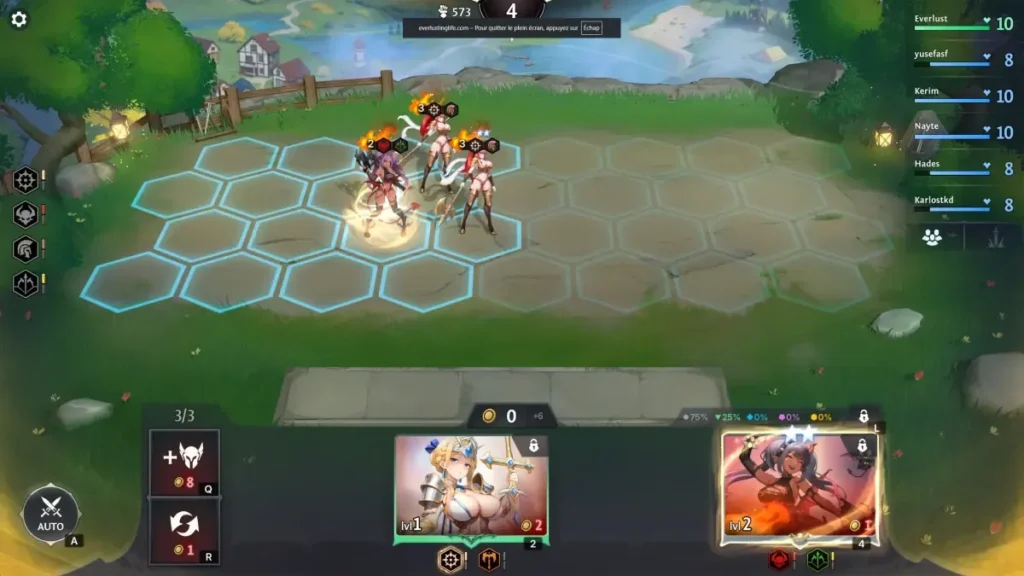
Alright, you’ve built your dream team. You’ve nurtured their bonds and positioned them on the hex-based board. Now the gates open, and the auto-battle mechanics take over. This is the moment of truth where your preparation is put to the test. 🏆
Combat unfolds in thrilling, hands-off rounds. Each character uses their basic attacks and abilities automatically based on cooldowns, energy gain, and their AI priorities. Your role as a strategist isn’t over, though—it’s just different. The outcome is determined by several key factors you control before the first arrow flies:
- Positioning: This is arguably the most important strategic layer. Placing your Guardian in the right hex to intercept the most enemies, positioning your Arcanist where their cone-shaped spell hits the maximum number of foes, or tucking your Acolyte safely behind a rock formation are all crucial decisions. Terrain matters!
- Ability Order: Some powerful abilities have long wind-ups. If your main damage spell gets interrupted because the enemy reached your mage first, you’ve already lost. You need to ensure your frontline can hold long enough for your backline to unleash.
- Synergy Activation: Those team synergies we built? They activate passively in battle, providing their bonuses automatically. Seeing your “Runewardens” synergy glow, granting all affected characters a shield as the battle starts, is a sure sign your squad building strategy guide is working.
Let me give you a real gameplay example from my own experience. I was facing a tough boss in the Crystal Caverns—a giant beast that would charge my backline and instantly defeat my supports. My initial formation was a standard “wall in front, damage in back” setup. I failed. Twice. 💥
I needed a new fantasy RPG strategy. I studied the boss’s pattern and realized it always targeted the character furthest back in a straight line. My “aha!” moment was repositioning my tanky, but low-damage, Guardian to that far-back hex. I then placed my main damage-dealing Striker in the mid-line, slightly off-center. When the battle began, the boss charged past everyone, slammed into my Guardian at the back (who absorbed the hit with a giant grin), while my Striker was now perfectly positioned to attack the boss’s flank without being in its direct path. My Acolyte, now safe, kept everyone healed. We won without losing a single character. That victory wasn’t about stats; it was about outthinking the opponent through positioning.
This is the essence of Everlusting Life auto-chess gameplay. It’s a puzzle where the pieces have their own minds, and you solve it through clever arrangement and foresight. The Everlusting Life progression system ensures you’re always facing new puzzles, too. As your story advances, you’ll encounter enemies with shields that require magic to break, flying units that ignore your front line, or environmental hazards that damage anyone standing in certain hexes. Your character team composition must be adaptable.
The beauty of it all is that every defeat is a clear lesson. You didn’t lose because you clicked too slowly; you lost because your formation was weak to ambushes, or you lacked magic damage, or your healer was too exposed. Each loss teaches you how to refine your approach to how to build winning teams for the next challenge.
So, take a deep breath, strategist. Your journey in Everlusting Life is about the big picture. Forge bonds, plan your compositions with care, master the chessboard of battle, and then sit back to watch your legendary team bring your strategic vision to glorious, autonomous life. The world is waiting for your unique touch. ✨
Everlusting Life represents a thoughtfully crafted experience that merges strategic gameplay with narrative depth and emotional engagement. The game’s combination of auto-chess mechanics, character relationship systems, and branching storytelling creates a multifaceted adventure that appeals to players seeking both tactical challenges and meaningful character interactions. From squad building and trust development to unlocking secret content and experiencing alternate story paths, Everlusting Life offers substantial replay value and player agency. Whether you’re drawn to the strategic team-building aspects, the immersive character relationships, or the anime-styled visual presentation, this fantasy RPG delivers an experience designed for mature audiences who value substance alongside entertainment. For players ready to embark on this journey, Everlusting Life invites you to explore love, choice, and consequence in a richly woven fantasy world.